AI Governance Software for Production AI Agents
A practical guide to governing production AI agents through identity, bounded authority, approvals, observability, and durable accountability.
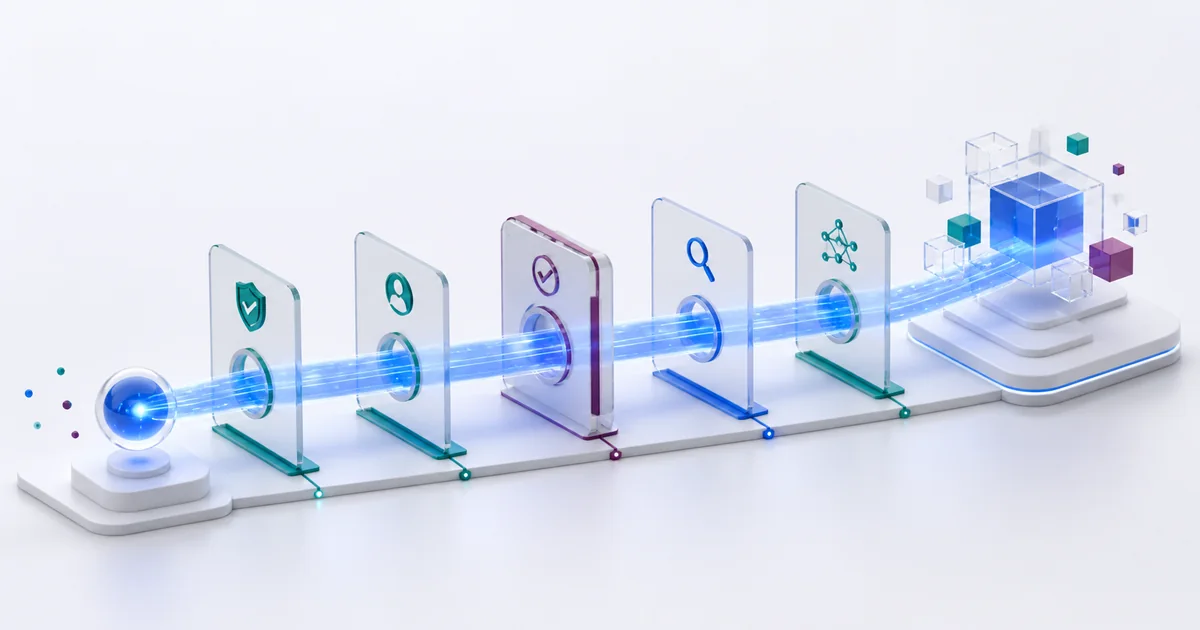
AI governance software gives an enterprise a consistent way to decide which AI systems may act, what they may access, where people must approve their work, and how every important decision can be understood later.
That discipline becomes essential when AI moves beyond isolated experiments. A single copilot may be easy to oversee manually. Hundreds or thousands of task-specific and autonomous agents spread across business units, models, tools, and customer workflows require an operating system of controls.
What AI governance software should control
Useful governance begins before an agent acts. It defines the conditions under which work may happen and preserves the evidence required to operate responsibly at scale.
A complete system should answer six practical questions:
- Identity: Which agents exist, where are they deployed, and who owns them?
- Purpose: What business role and objective has each agent been assigned?
- Authority: Which data, tools, models, systems, and budgets may it use?
- Approval: Which decisions require a person before work can continue?
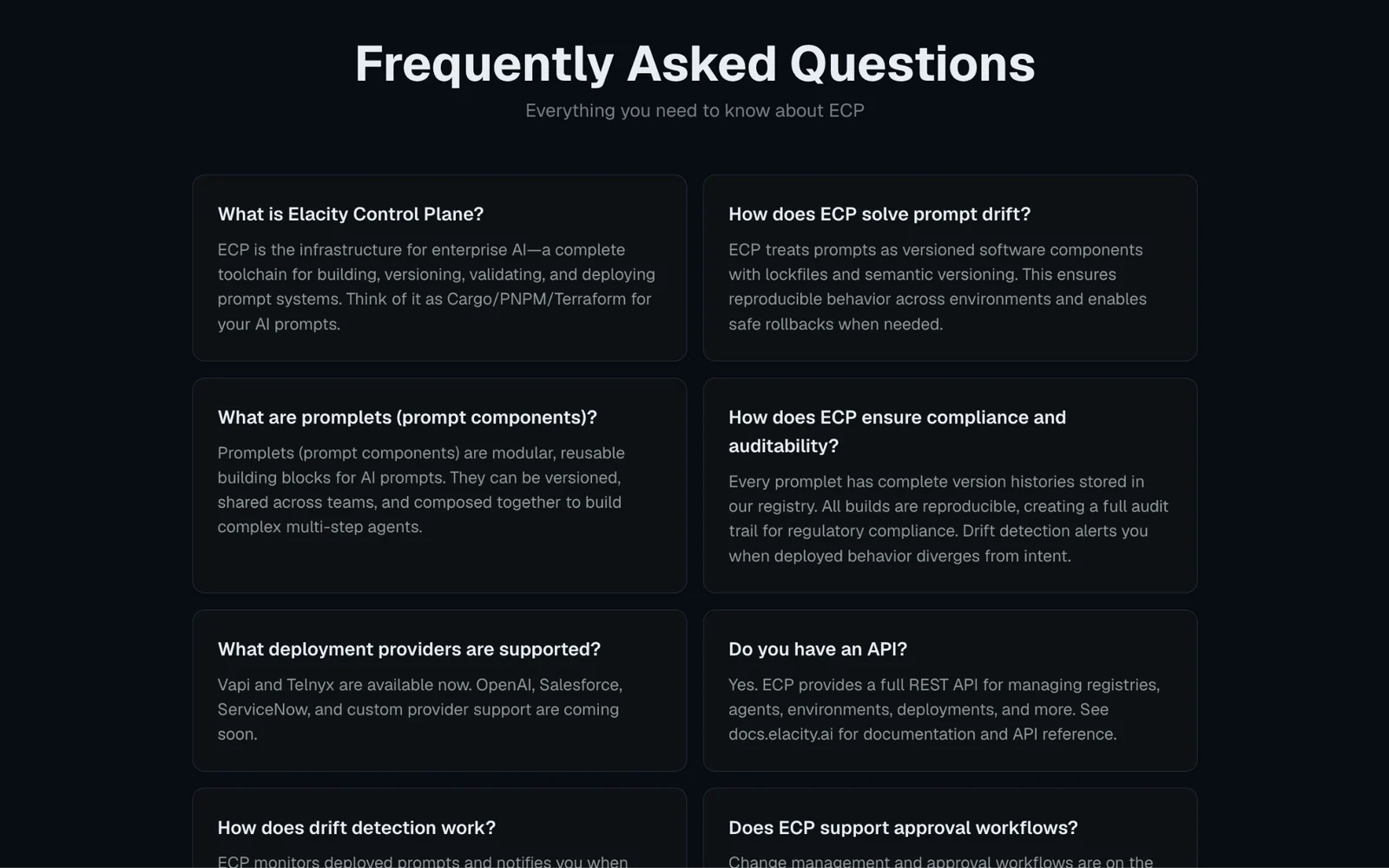
- Behavior: Is the agent performing as intended within its role?
- Accountability: Which version acted, what happened, and what should change next?
When these answers live in separate documents, runtime dashboards, and institutional memory, governance becomes a manual reconciliation exercise. Production AI needs them connected.

Why output monitoring is only one part of governance
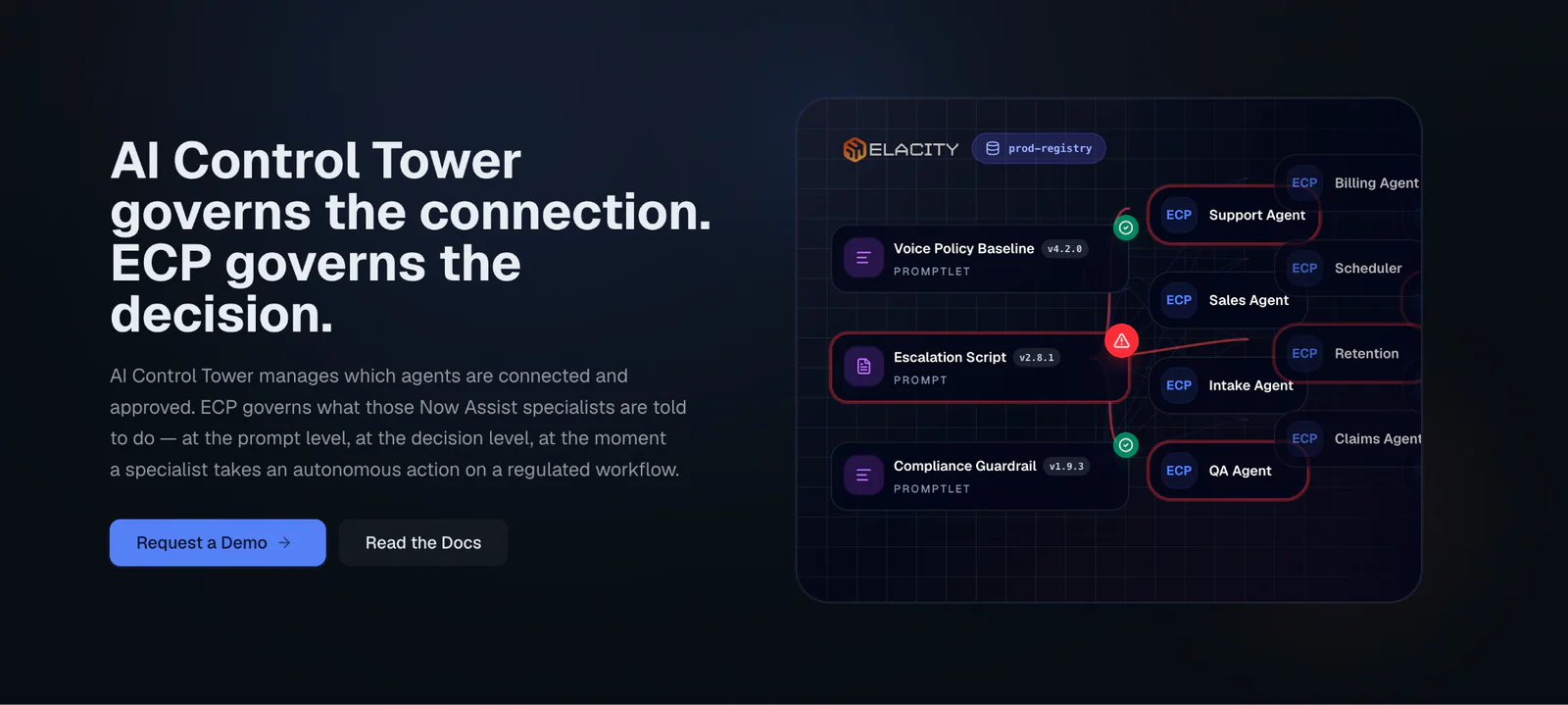
Observability is valuable. Teams need to see what an agent did, whether a workflow completed, and where performance changed. But monitoring an output cannot replace controlling the inputs that shaped it.
An agent’s behavior is influenced by its instructions, permissions, tools, model, data, budget, environment, and approval rules. If those inputs can change without a clear record, the enterprise cannot reliably explain why the agent behaved differently.
Governance should therefore operate across the full lifecycle:
- define the worker’s role and boundaries before deployment;
- record the version and configuration placed into production;
- enforce policies and approvals while work is underway;
- observe behavior, outcomes, and exceptions;
- preserve the history needed to audit and improve the system.
This creates a feedback loop. Production activity becomes intelligence that can improve the next version without weakening control.
The controls production teams need
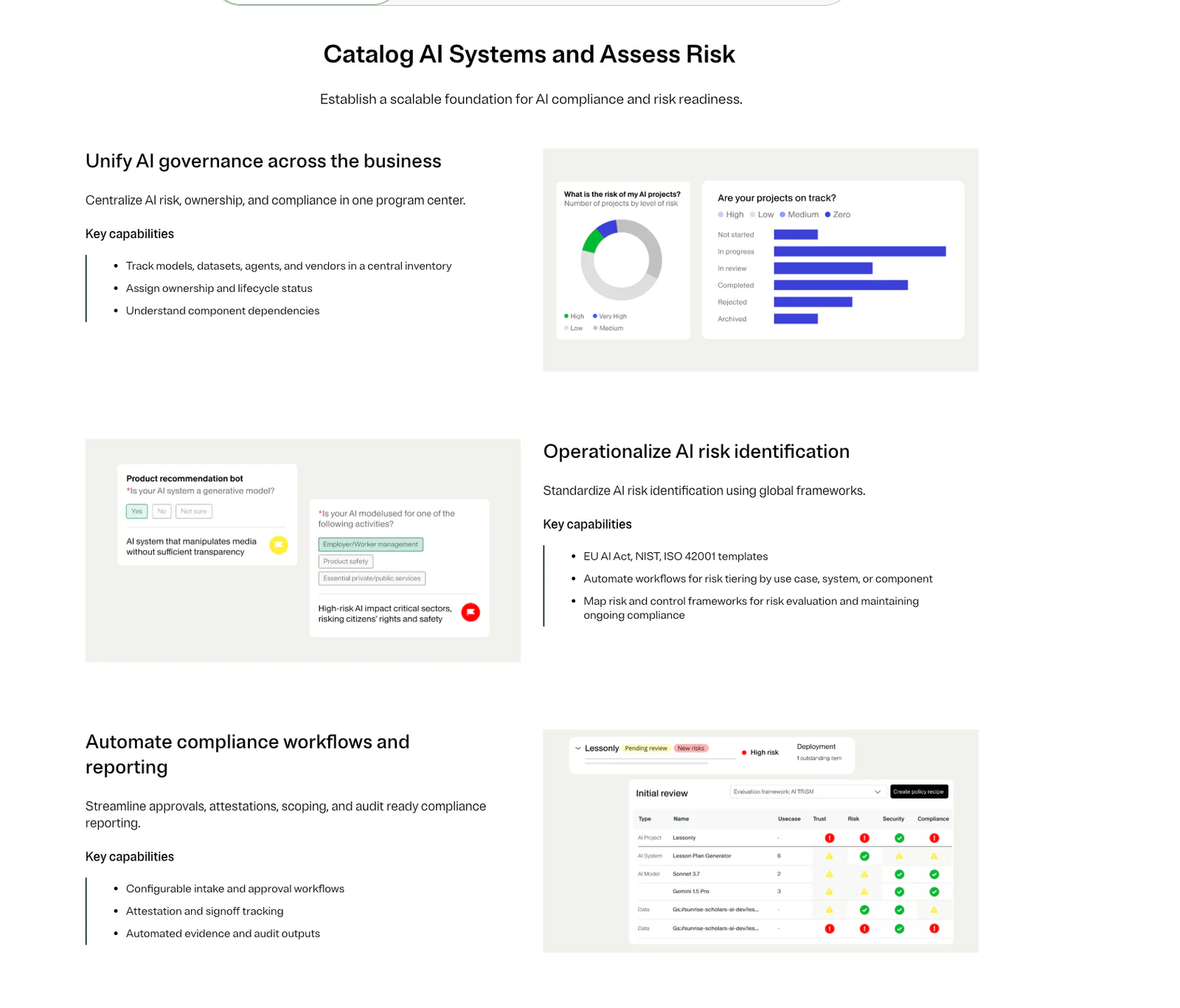
A secure agent directory
Every agent should have a durable identity record. The record should show ownership, deployment location, permitted interactions, configuration, and access.
This is especially important when agents are created by different teams or supplied by outside platforms. Discovery and ownership are prerequisites for meaningful policy enforcement.
Governed execution
Each worker should receive only the tools, authority, information, and budget required for its role. Policies belong in the operating path, where they can shape what the agent is allowed to do.
The goal is to turn broad principles into enforceable operating boundaries. A customer-service agent and a finance agent should not inherit the same permissions simply because they use the same model.
Human approval workflows
Human involvement should be intentional. Routine, low-risk actions can move quickly while defined decisions pause for review.
Approval rules should identify:
- the action or threshold that triggers review;
- the person or role responsible for approving it;
- the information the reviewer needs;
- the decision and its timestamp;
- the next action after approval or rejection.
This makes human oversight part of the workflow instead of an informal process around it.
Version and activity history
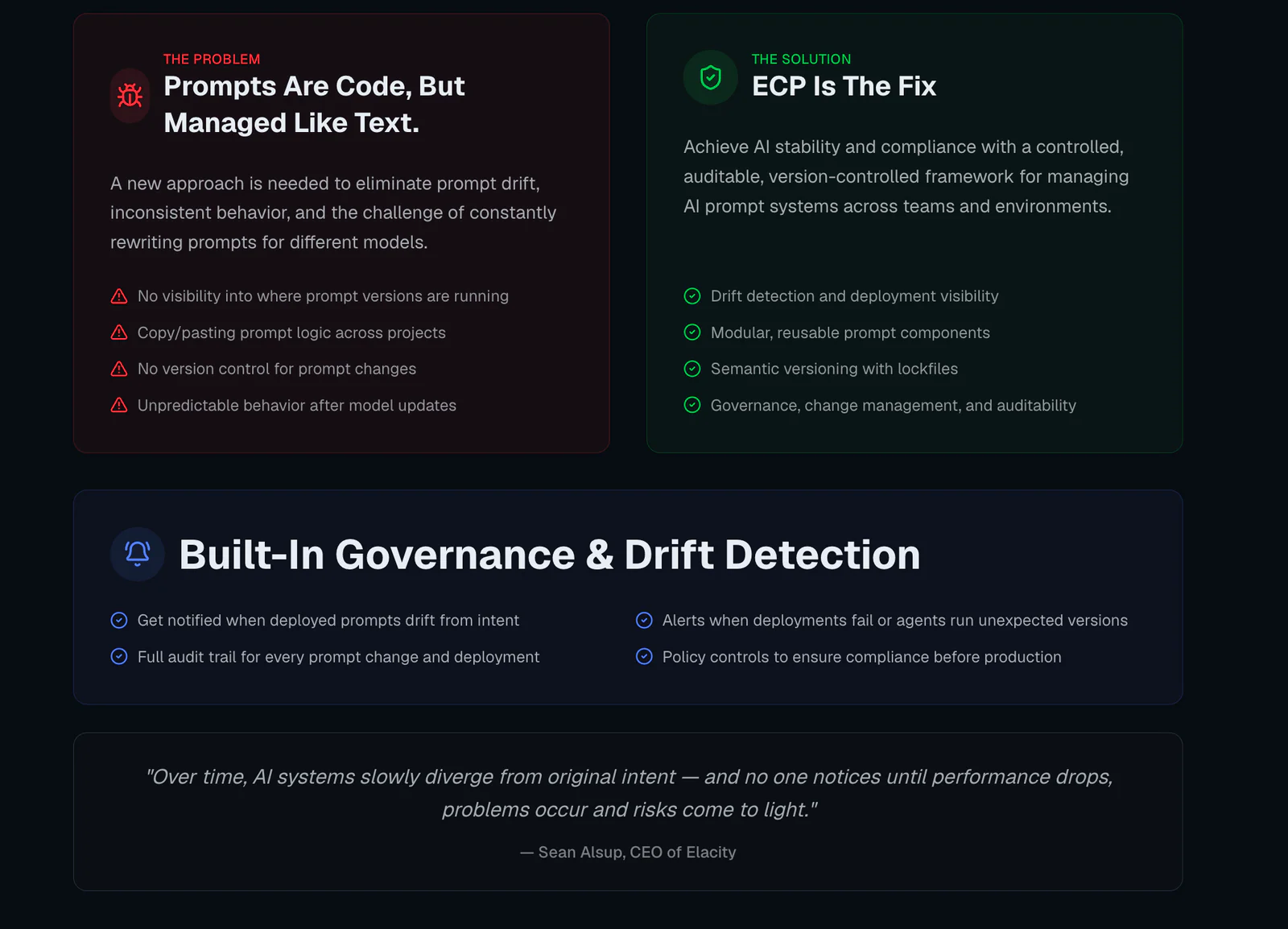
Production teams need to know which configuration was active at a given moment. Changes to prompts, policies, tools, and permissions should be attributable and reviewable.
Version history makes it possible to compare behavior over time, investigate incidents, and improve a worker without losing the context behind earlier decisions.
Behavioral observability
Technical health and business performance belong in the same operating picture. Teams should be able to see whether an agent completed its assigned work, produced the intended outcome, encountered exceptions, or requires iteration.
That view helps technology leaders manage risk while giving business leaders evidence of value.
How to evaluate an AI governance platform
Start with the operating questions your teams will need to answer every day. A polished policy library is not enough if ownership, approvals, deployment state, and business outcomes remain fragmented.
Evaluate whether the platform can:
- govern task-specific and autonomous agents across more than one model or runtime;
- connect to the tools and enterprise systems you already use;
- keep enterprise data and intelligence under your control;
- define permissions and policies before the first action;
- preserve version, approval, and activity history;
- surface behavioral signals and measurable business outcomes;
- support both technical operators and business stakeholders;
- adapt as new models and AI tools enter the environment.
Open architecture matters here. Enterprises should be able to choose the models, runtimes, tools, and technologies suited to each use case without rebuilding governance around every new provider.
Governance should make responsible speed possible
The best governance system does more than reduce risk. It gives the organization enough clarity and control to move faster.
Business teams gain a dependable path from idea to production. Technology leaders gain visibility into ownership, access, behavior, and change. Integrators gain a governed foundation that can support different clients and technology choices.
Ellaworks brings those responsibilities together in one open service platform. It combines a secure agent directory, governed execution, human approvals, behavioral observability, private AI options, open integrations, and an intelligence portal. Ellavox engineers support the implementation and use Ellaworks in production today.